Some research visits provide an opportunity to look at a familiar challenge from a different perspective. When Docent Matti Linjama travelled to Germany for a research visit at the Karlsruhe Institute of Technology (KIT) from April to June 2026, the focus was on exactly that: gaining a deeper understanding and another view on modelling temperature management systems for non-road mobile machinery (NRMM).
The visit was closely connected to WP5 of the Flexible Clean Propulsion Technologies (Flex-CPT) project, particularly Task 5.1 on temperature management for NRMM powertrains. Linjama was hosted by Prof. Marcus Geimer, leader of the Mobima laboratory at KIT and author of the well-known SAE book Mobile Working Machines. Mobima is an internationally recognised research unit in the field of non-road mobile machinery, with particular expertise in agricultural machines. This made the group a highly relevant environment for the research questions addressed within WP5.
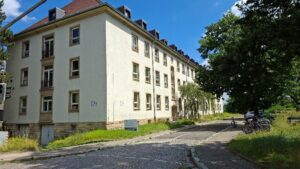
The main purpose of the mobility was to gain a better understanding of modelling temperature management systems in NRMMs, especially the modelling of losses and how these losses transform into heat. This is becoming increasingly important as conventional powertrains are replaced or complemented by electrified solutions, changing both the amount of waste heat available and the way thermal management systems need to be designed.
One major benefit of the visit was access to Mobima’s excavator data. The dataset was transformed into a format compatible with previously developed modelling tools, allowing the existing methods to be applied to a new machine and operating context. New component models were created for passive cooling, radiators, and auxiliary devices, extending the existing component model library.
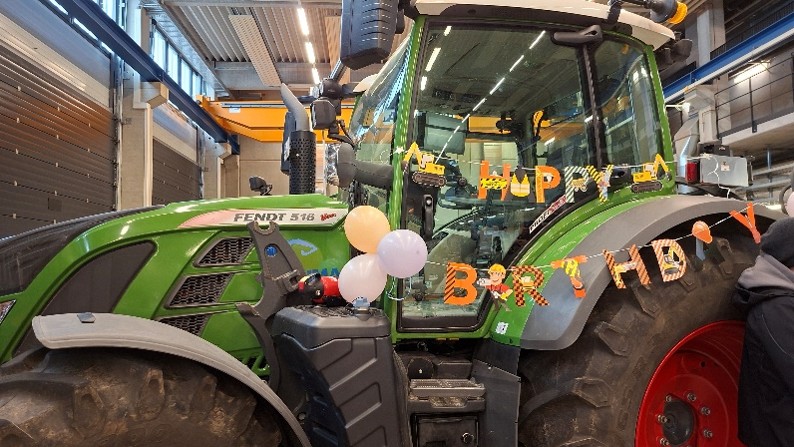
A particularly interesting finding was that waste heat may not necessarily be sufficient to warm up the system at low temperatures. This has clear relevance for the development of electrified NRMM powertrains intended to operate under demanding Nordic and Arctic conditions.
The research carried out during the mobility will continue beyond the visit. The results are planned to be published in a joint scientific article in spring, while collaboration between the groups is expected to continue through further joint publications, research exchanges, and common project applications.
The visit also provided opportunities to follow developments in the wider NRMM industry. During his stay, Linjama visited the iVT Expo, which presented components, materials, systems, and technologies for the next generation of off-highway vehicles used in areas such as construction, mining, agriculture, material handling, and forestry.
Electrification of NRMMs was one of the main themes of the exhibition, with many interesting components and different temperature management solutions on display. The visit also provided an opportunity to meet Lumikko, one of the Flex-CPT company partners.
As with many research exchanges, regular discussions with the host research group were an important part of the experience. Frequent discussions with Prof. Geimer proved fruitful for both sides and helped to sharpen the focus of the research. The visit itself went smoothly, without major challenges, and the welcoming atmosphere at Mobima made it easy to settle in and start working. Linjama also found the working culture relatively similar to Finland.
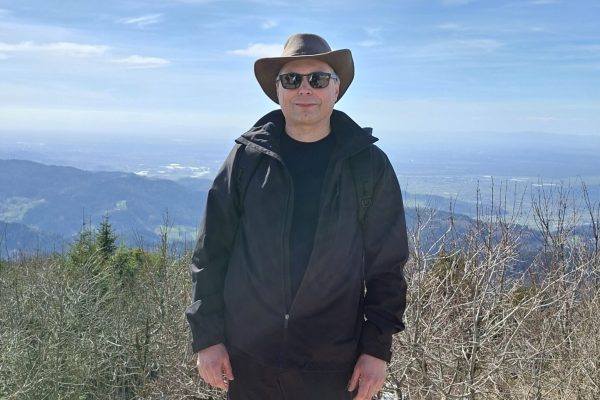
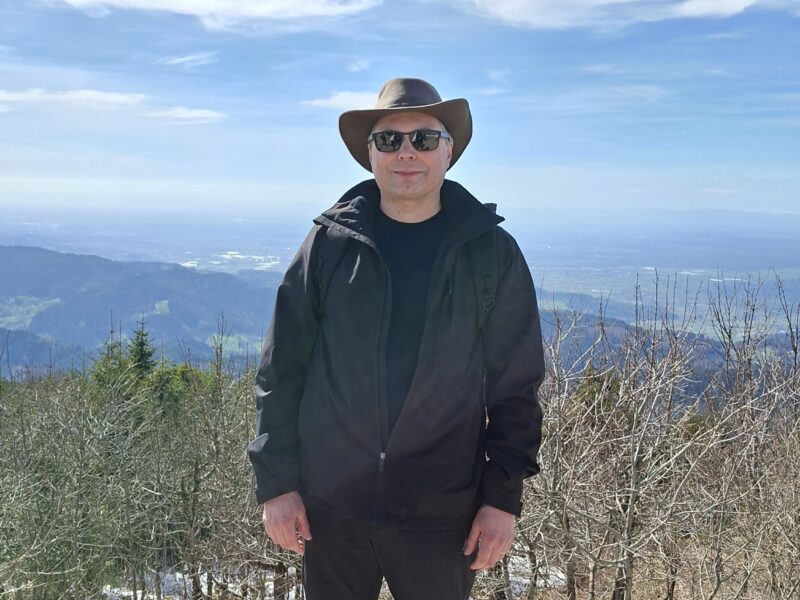
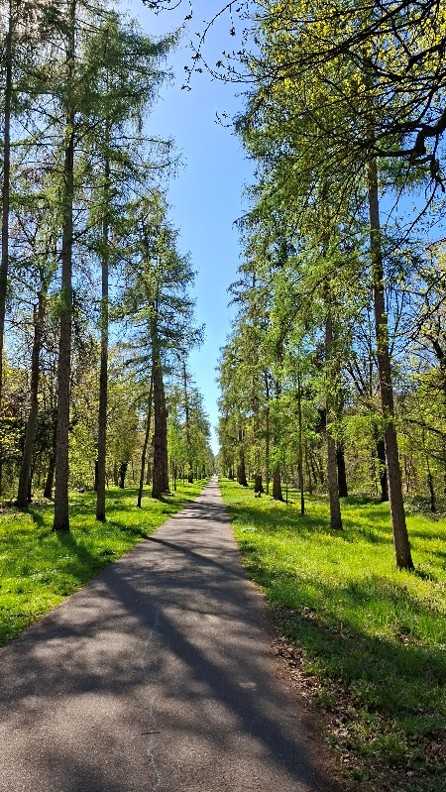
Outside the research work, Karlsruhe and its surroundings offered plenty to explore. Karlsruhe is a green city with broad-leaved trees, a large park in the centre, and good infrastructure for cycling and public transport. The nearby Schwarzwald, or Black Forest, begins only a few kilometres from the city and stretches around 130 kilometres towards the Swiss border. Its forests provide extensive hiking opportunities, and at higher altitudes the spruce-dominated landscape can feel surprisingly familiar to someone from Finland.
Public transport also made it easy to explore the region. Linjama used the Deutschlandticket for his daily commute and for trips with his family to nearby cities including Strasbourg, Heidelberg, Stuttgart, Baden-Baden, and Freiburg.
Family life was also an important part of the mobility experience. As Linjama’s children are keen swimmers, the family noticed that swimming opportunities around Karlsruhe were somewhat different from what they were accustomed to in Finland, with natural lakes being less common and swimming mainly available at outdoor pools and designated beaches. This encouraged the family to explore other activities in the area as well, including several enjoyable playgrounds and museums. The technical museums in Sinsheim and Speyer were particular highlights, with Linjama describing them as places every engineer should visit.
The final week brought temperatures above 35°C, adding another memorable dimension to the stay. The family made the most of the warm weather with visits to museums and a weekend trip to the Alps.
From a WP5 perspective, the mobility strengthened the Flex-CPT project’s understanding of how electrification changes thermal management requirements in non-road mobile machinery. While electrified powertrains can substantially reduce energy losses, they also introduce more complex thermal management needs, particularly when machines must operate across a wide range of ambient temperatures.
The work carried out at KIT provides new modelling capabilities and comparative data for studying these challenges. In particular, the finding that reduced waste heat can become a limitation rather than an advantage during cold operation highlights an important consideration for future NRMM powertrain development. Together with continued collaboration between the research groups, These results contribute to the Flex-CPT project by supporting the development of efficient and robust powertrain solutions for next-generation non-road machinery.