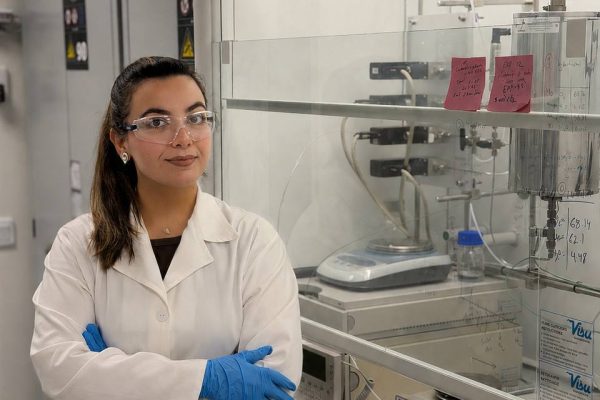
International mobility continues to strengthen collaboration within the the Flexible Clean Propulsion Technologies (Flex-CPT) project. Recently, Anthony Katumwesigye from Åbo Akademi University visited the University of Agder (UiA), Norway, where he worked with researchers to explore decarbonisation and electrification pathways for off-road construction machinery.
The exchange contributed directly to Flex-CPT Work Package 3 (WP3) by examining how clean propulsion solutions for non-road mobile machinery can be evaluated under realistic operating conditions. Norway provides a particularly relevant setting, where policy and regulation are already driving the development of zero-emission construction sites while infrastructure projects continue to expand in complex terrain.
During the visit, Katumwesigye worked on an integrated assessment comparing propulsion options for construction machinery, combining life-cycle environmental assessment (LCA) with techno-economic assessment (TEA). The work was framed around real operational output rather than machine brochure specifications, allowing propulsion technologies to be compared under realistic duty cycles and utilisation patterns.
The mobility also helped consolidate a reproducible work-normalised evaluation framework linking propulsion technology performance with real-world feasibility factors such as infrastructure availability, energy pathways, and operational constraints. Initial findings from the work were presented within the project community at the Flex-CPT LCA workshop at Tampere University in November 2025.
Ensuring fair comparisons between very different technology pathways was one of the key challenges of the research.“The main challenge was ensuring fair and comparable assumptions across very different technology pathways while keeping the analysis connected to real operational constraints,” Katumwesigye explains.
From the project leadership perspective, the exchange also introduced an important new use case to the consortium’s research portfolio.“Through this mobility, we got access to a different type of use case—offroad machinery in infrastructure construction,” says Magnus Hellström.
Studying the Norwegian context also allowed the team to examine electrification in one of the most advanced environments for zero-emission construction.“We were able to study electrification of offroad machinery in a country that is world leading in the field,” Hellström adds.
Beyond the research work, the stay in Norway also offered opportunities to connect with the UiA community and experience the local environment and culture.“A three-day hiking trip in the Telemark region was a great way to experience the landscape and outdoor culture,” Katumwesigye reflects.
Activities organised by doctoral and researcher groups at UiA helped create a welcoming research environment, with social events, sports activities on campus, and visits to cultural venues such as the Kunstsilo art gallery in Kristiansand.
Looking ahead, the collaboration between the teams will continue, and the partners are already involved together in a new EU research proposal led by the University of Agder. Katumwesigye’s next research steps will build on the mobility by expanding the analysis to farm and agricultural equipment, including renewable biofuels and alternative e-fuels alongside electrification pathways.